
Samuel F. O’Reilly did not invent tattooing, and he did not invent the first electric machine in the world. What the record does show is more precise, and still important: on December 8, 1891, he received U.S. Patent 464,801 for a tattooing machine, the first such patent issued in the United States.[1] He built it by adapting Thomas Edison’s electric pen, a stencil tool developed in 1875 and patented in 1876, keeping a motor-driven reciprocating needle and adding an ink reservoir and a depth guide.[3][1][4] From Chatham Square, at the foot of the Bowery, he tattooed, sold machines and took at least one rival to court. This page follows the patent, the shops and the disputes, and it flags what is still unsettled.
Quick facts
- Born
- May 1854, Waterbury, Connecticut
- Died
- April 29, 1909 (some later accounts say 1908)
- Known for
- U.S. Patent 464,801, December 8, 1891
- Shops
- 5 Chatham Square (by 1901, and earlier by some accounts); 11 Chatham Square from about 1904
- Machine
- Adapted from Edison’s electric pen: motor-driven needle, plus an ink reservoir and a depth guide
- Successor
- Charlie Wagner took over 11 Chatham Square after O’Reilly’s death
Waterbury, the service and a start in New York
O’Reilly was born in May 1854 in Waterbury, Connecticut, to Irish immigrants Thomas O’Reilly and Mary Ann Hurley.[9][8] How he learned to tattoo is not settled in a single record. The Tattoo Archive, drawing on public records compiled by Carmen Nyssen, says he enlisted in the Navy around 1875 and later said he learned the craft there.[7] The Tattoo History Atlas instead describes a brief Marine Corps enlistment in 1875–76.[8] We give both accounts rather than choose between them.
The Tattoo Archive also reports a burglary conviction in Waterbury and a term in prison.[7] The Tattoo History Atlas dates that episode to 1873 and names Wethersfield State Prison, along a single chain of sources we have not independently checked.[8] It belongs in the file, with that caution attached.
By the mid-1880s he was in New York. An 1886 Brooklyn directory lists him as an “operator.”[7] In 1888 a newspaper named a “James O’Reilly” at the Chatham Square Museum, which the Tattoo Archive takes as likely him under a slightly different first name, and by 1890 a report describes him as both a tattooer and a tattooed attraction at that museum.[7] The museum sat at the foot of the Bowery, in the same few blocks where the electric trade would concentrate for the next seventy years.
The 1891 patent and Edison’s electric pen
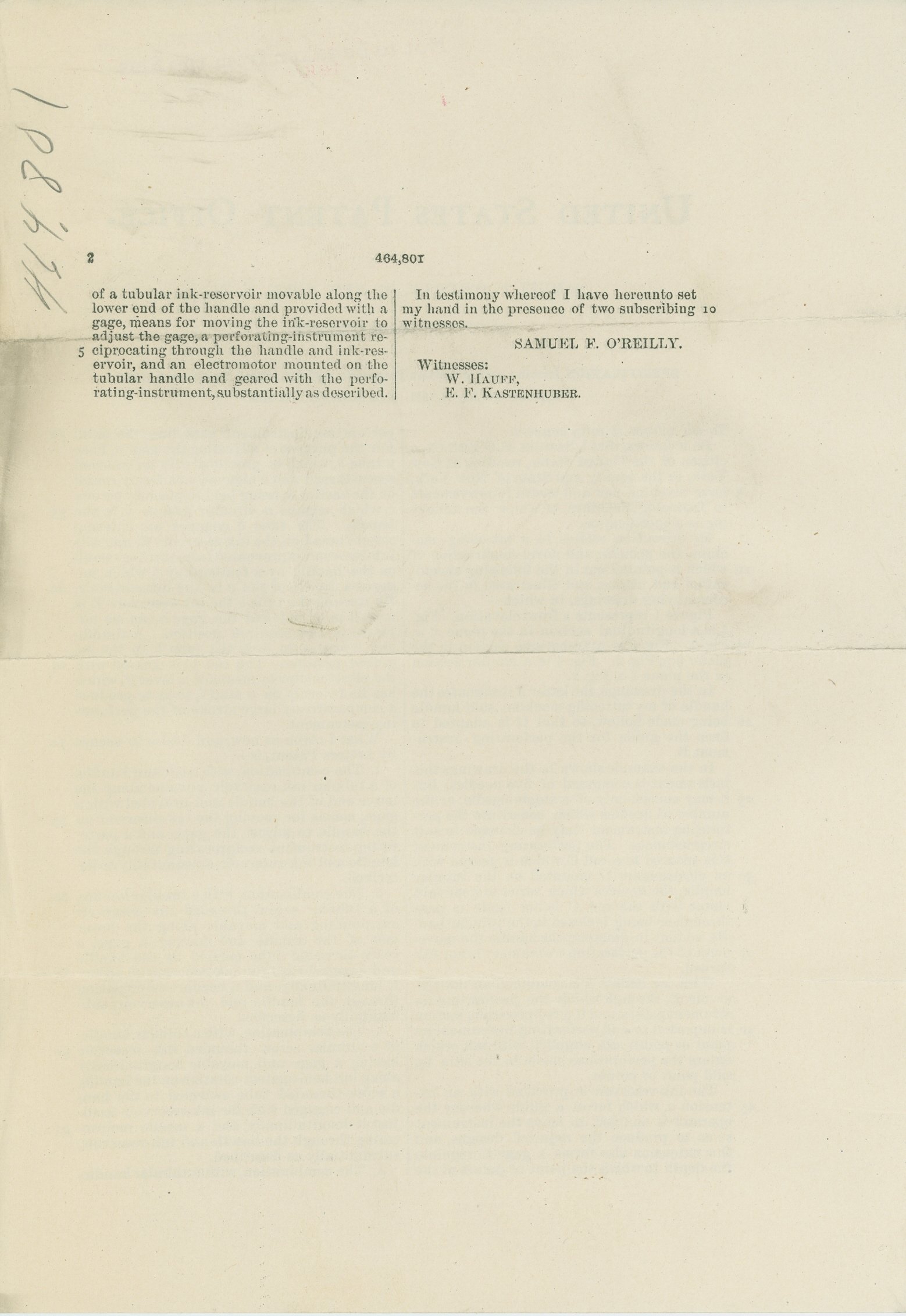
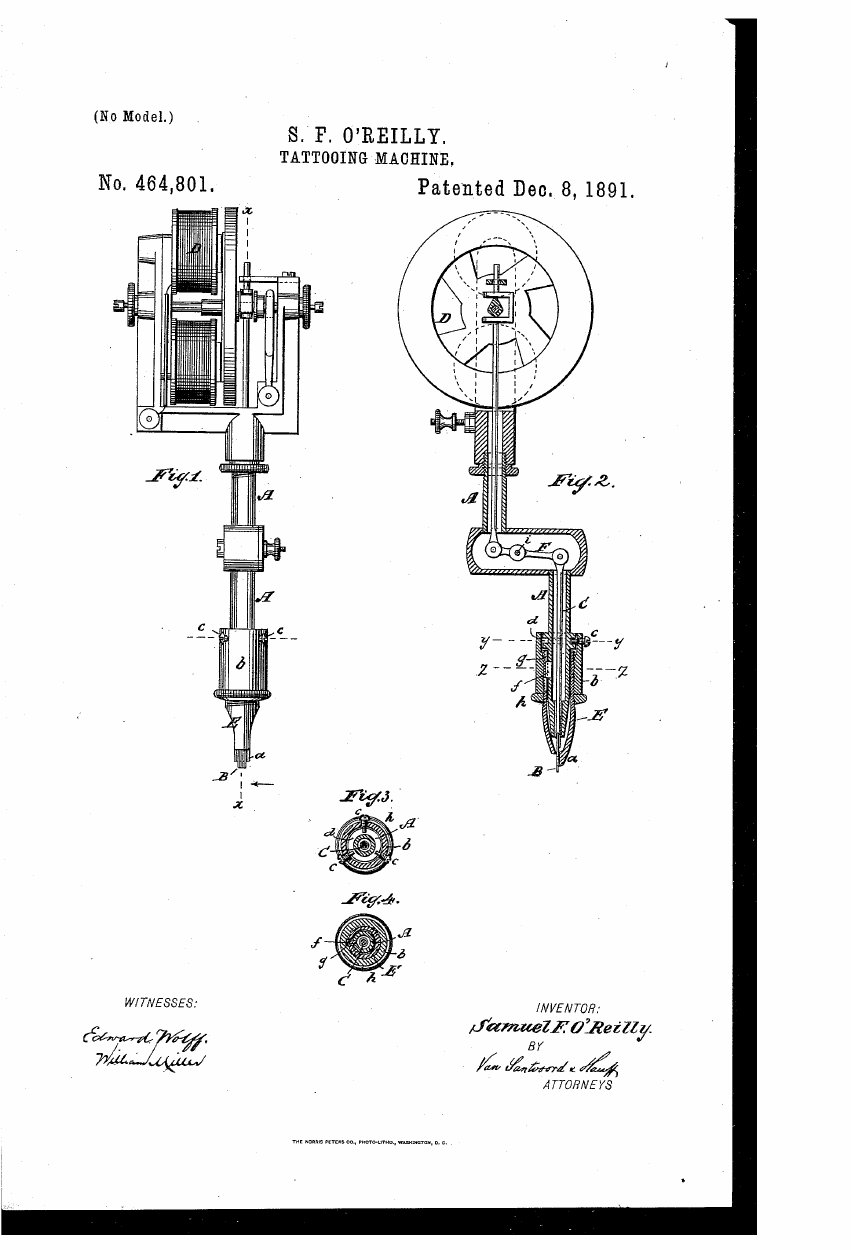
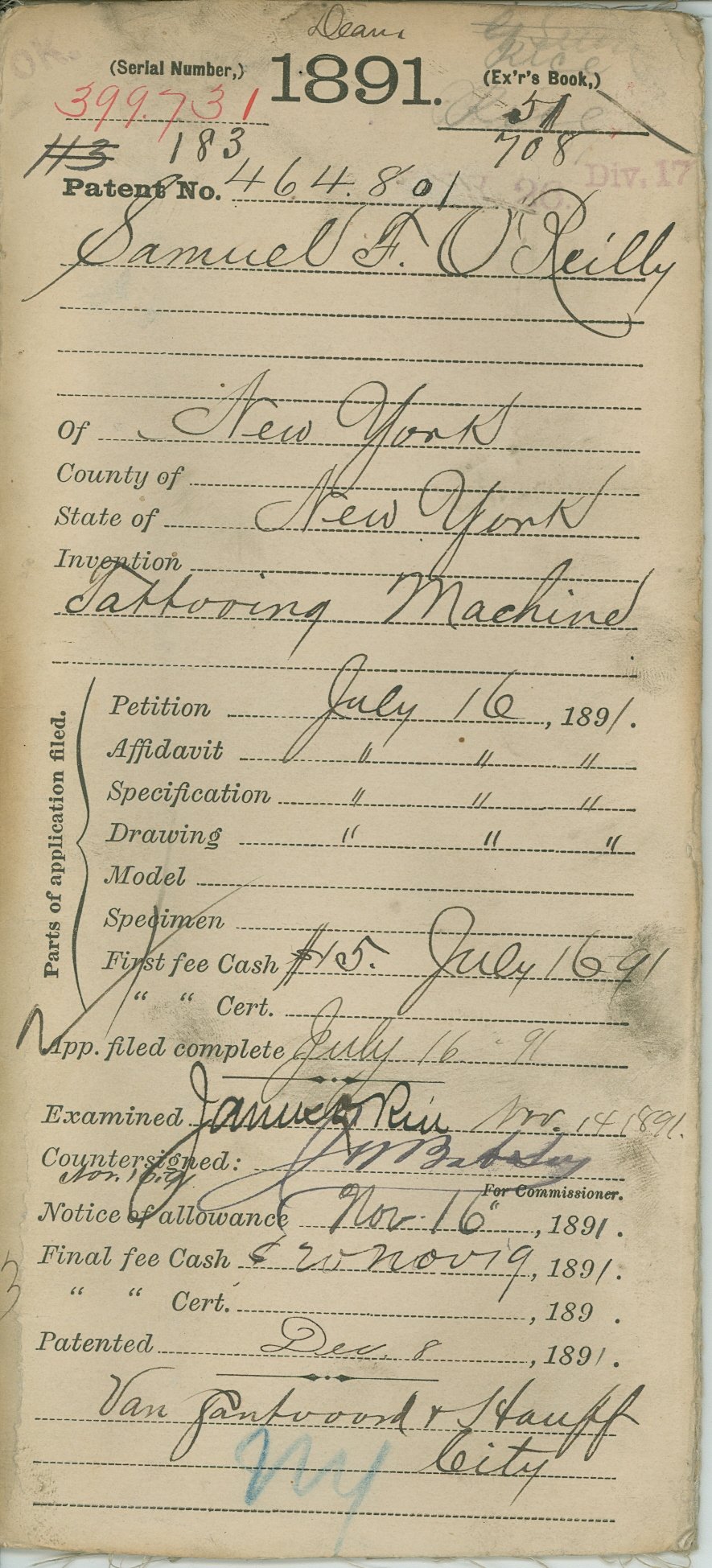
On July 16, 1891, O’Reilly filed an application for a “Tattooing-Machine.” On December 8, 1891, the Patent Office issued U.S. Patent 464,801.[1] It is the first U.S. patent for a tattoo machine. It is not, on the evidence we have, proof that no one else had already tried a mechanized needle, in New York or abroad.[8]
The starting point was Thomas Edison’s electric pen. Edison developed the pen in 1875 and received U.S. Patent 180,857 for it in 1876.[3][2] Its job was office work, not skin. The pen punched a line of small holes in paper to make a stencil; ink could then be pressed through the stencil to copy a document.[3][5] The tool used a motor-driven needle that moved up and down.
O’Reilly kept that reciprocating, motor-driven needle and changed what it was for. The 1891 patent describes a machine with an ink reservoir and a depth guide, so the needle could carry pigment into the skin at a controlled depth.[1][4] Writers sometimes flatten this into a story that he simply “turned Edison’s pen into a tattoo machine,” or call the earlier tool an “electric rotary pen.” The first is too neat, as the Tattoo History Atlas has cautioned; the second misnames Edison’s device.[8][3] We describe the connection as the records do: an adaptation of a stencil pen, with new parts for tattooing.
Speed was the practical gain. The Smithsonian has estimated that a tattooer working by hand made two or three punctures a second, while an electric machine could make about fifty.[6] For dime-museum performers who wanted heavy coverage, and for a shop that sold both tattoos and tools, that difference mattered.
Wikipedia notes that, before the patent, O’Reilly had already used a modified dental plugger on dime-museum attractions around 1889–91.[9] The Tattoo History Atlas cites an 1898 New York Sun interview in which he mentioned trying both Edison’s pen and a Bonwill plugger, while warning that the interview has not been retrieved verbatim.[8] We treat those pre-patent experiments as reported, not as a second patent claim.
Chatham Square: shops, sales and a lawsuit
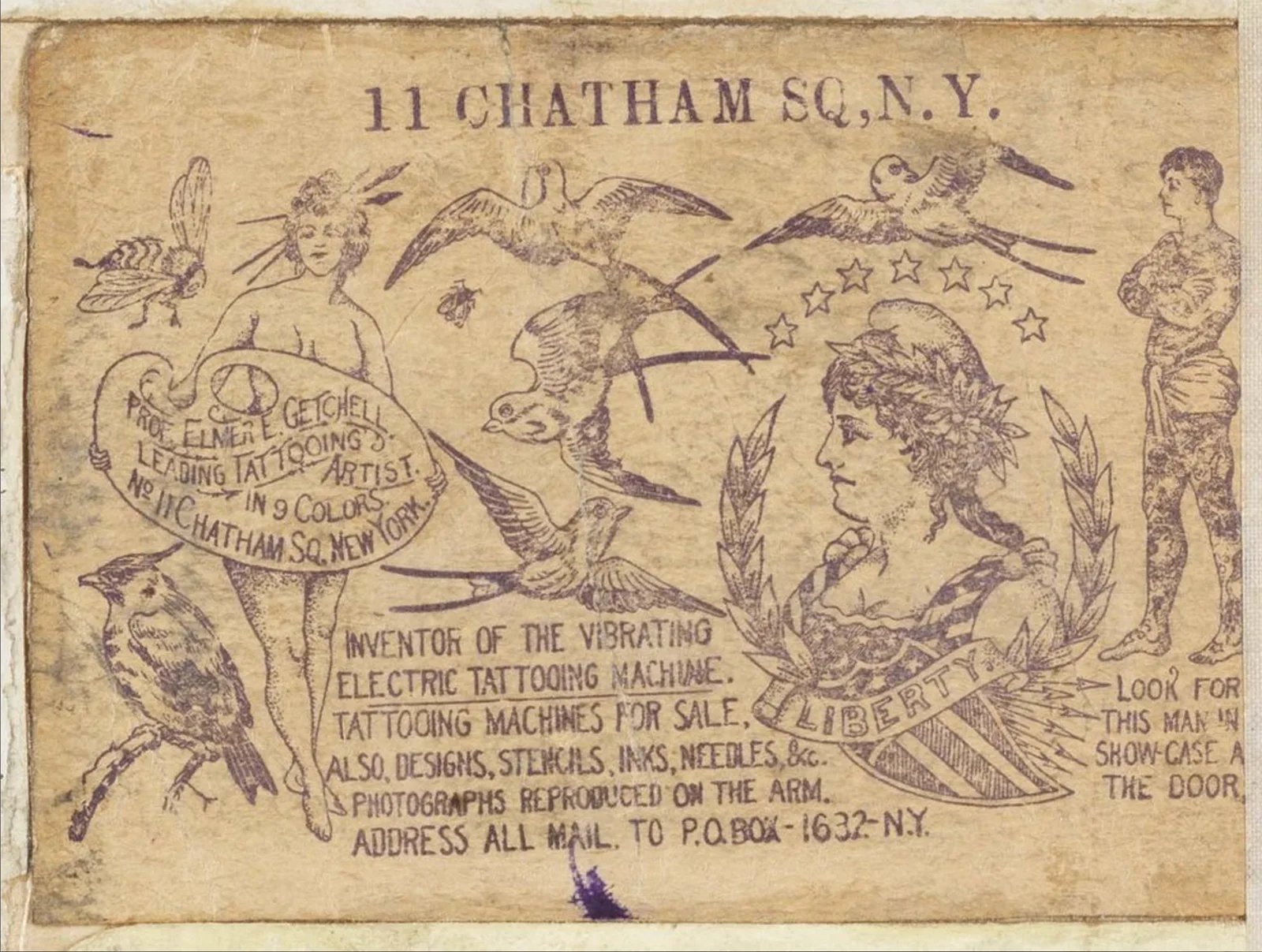
O’Reilly’s working life in New York is tied to two addresses on Chatham Square. A 1901 city directory puts him at No. 5, and the Tattoo History Atlas dates his time there from about 1887.[7][9][8] Around 1904, after Elmer Getchell left the city, O’Reilly moved into No. 11, the room Getchell had opened in 1899.[7] Those two numbers, a few doors apart, became the best-known addresses in American tattooing.
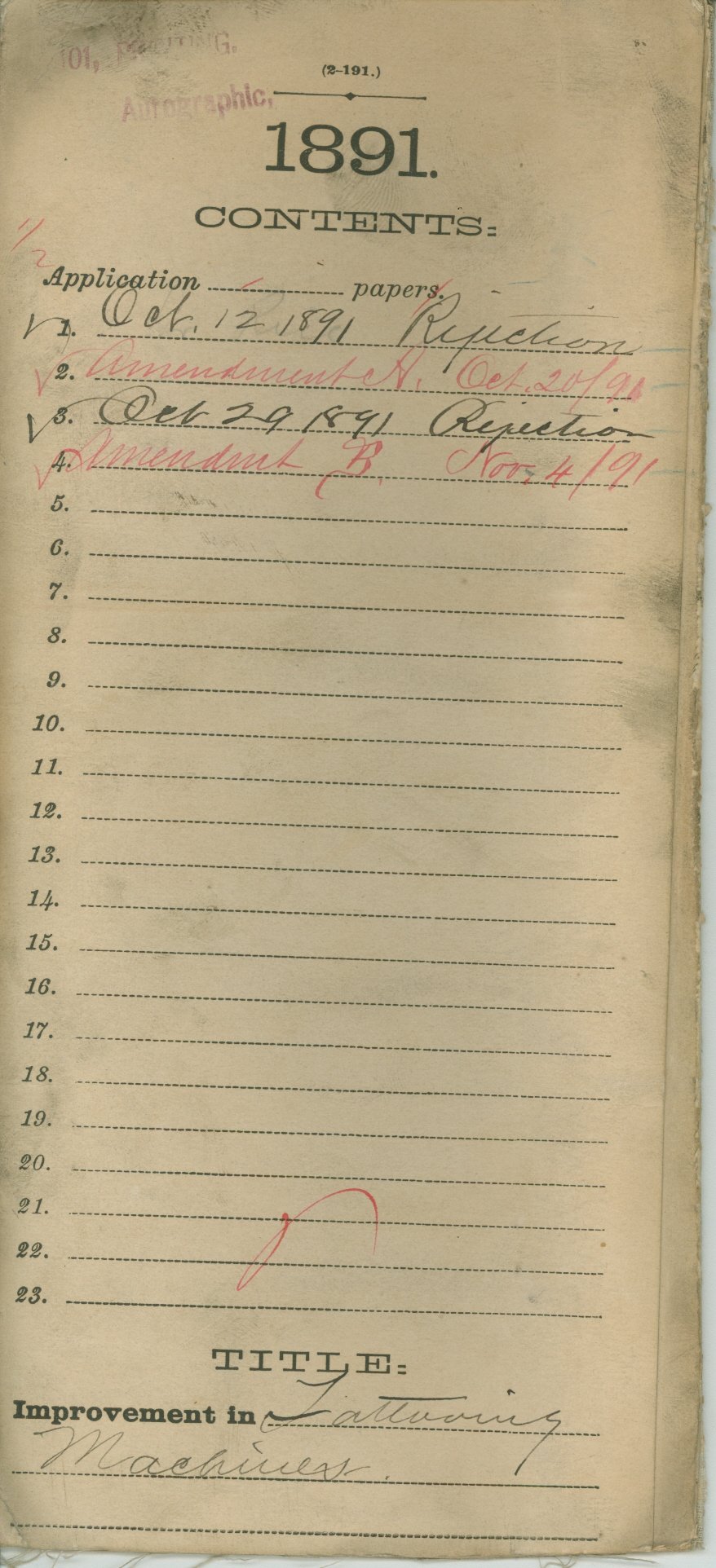
The two men had first worked as partners at No. 5, from about 1897 to 1899, then split.[7] In April 1899 O’Reilly filed a bill of complaint in the U.S. Circuit Court for the Southern District of New York, Equity Case File O-7211, claiming that Getchell was selling copies of the 1891 machine.[7][8] The New York Times covered the fight on February 6, 1900, under the headline “Tattoo Artist at War.”[7] The outcome of the case is not clear in the sources we have seen. Getchell, for his part, later advertised himself as the inventor of a “vibrating electric tattooing machine.” That claim, and the 1904 patent Charlie Wagner received for an upright-coil design, are taken up on Getchell’s and Wagner’s pages.
A New-York Historical Society blog post says O’Reilly also tattooed “society people” with discretion, away from the sidewalk trade.[11] How large that side of the business was, the surviving accounts do not say.
The Tattoo History Atlas mentions Japanese tattooers named Horitoyo (1898–99) and Mituhashi (1902) as possible partners, and a brother, John O’Reilly, exhibited as “The Tattooed Irishman.”[8] We have not confirmed those names in primary records, so they stay here as leads, not as established facts.
Death, the shop he left and what he did not invent
O’Reilly died after falling from a ladder, or a scaffold, while painting his house. The Tattoo Archive cites the Brooklyn Daily Eagle of May 1, 1909, in a piece titled “The Tattoo Man,” and gives the date as April 29, 1909.[7] Wikipedia follows that date and says he was buried at Holy Cross Cemetery in Brooklyn.[9] Two widely used later sources, the 2016 historical marker at 11 Chatham Square and a New-York Historical Society blog post, say 1908.[10][11] We use the 1909 newspaper date and note the disagreement.
Charlie Wagner took over the shop at 11 Chatham Square.[10][12] In 1904, while O’Reilly was still alive, Wagner had already received U.S. Patent 768,413 for a tattooing device whose electromagnetic coils stood upright, in line with the tube — the layout most coil machines still follow.[13] O’Reilly’s 1891 patent and Wagner’s 1904 patent are different machines, and they belong side by side in the story of New York’s technical contribution to the trade.
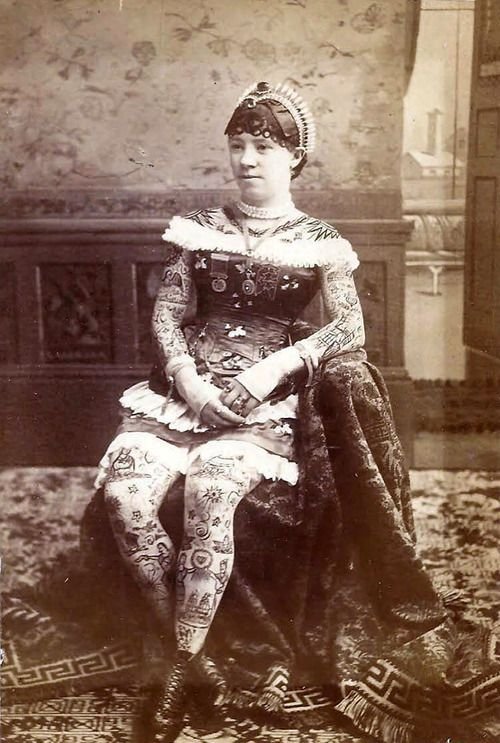
Several claims attached to O’Reilly do not hold up. He did not invent “the” electric tattoo machine in some absolute sense; he received the first U.S. patent.[8][1] British experimenters, including work associated with Tom Riley and a British patent issued to Sutherland Macdonald in 1894, are part of a wider history.[8] An 1898 “first mechanized shop” claim, which appears in some later writing, is not supported by the record we used for this page, and we do not repeat it. Older sources sometimes say he and Wagner tattooed Irene Woodward, “the original tattooed lady,” but she debuted in 1882, years before Wagner was tattooing and before the 1891 patent. The Tattoo History Atlas treats that attribution as chronologically doubtful.[14]
Whether Martin Hildebrandt, New York’s first professional tattooer, taught him is another open question. Wikipedia says he was “probably mentored” by Hildebrandt; the Tattoo History Atlas finds no primary document for it.[9][8] The Tattoo Archive notes that only one O’Reilly machine is known to survive, and that it is missing its tube assembly.[7]
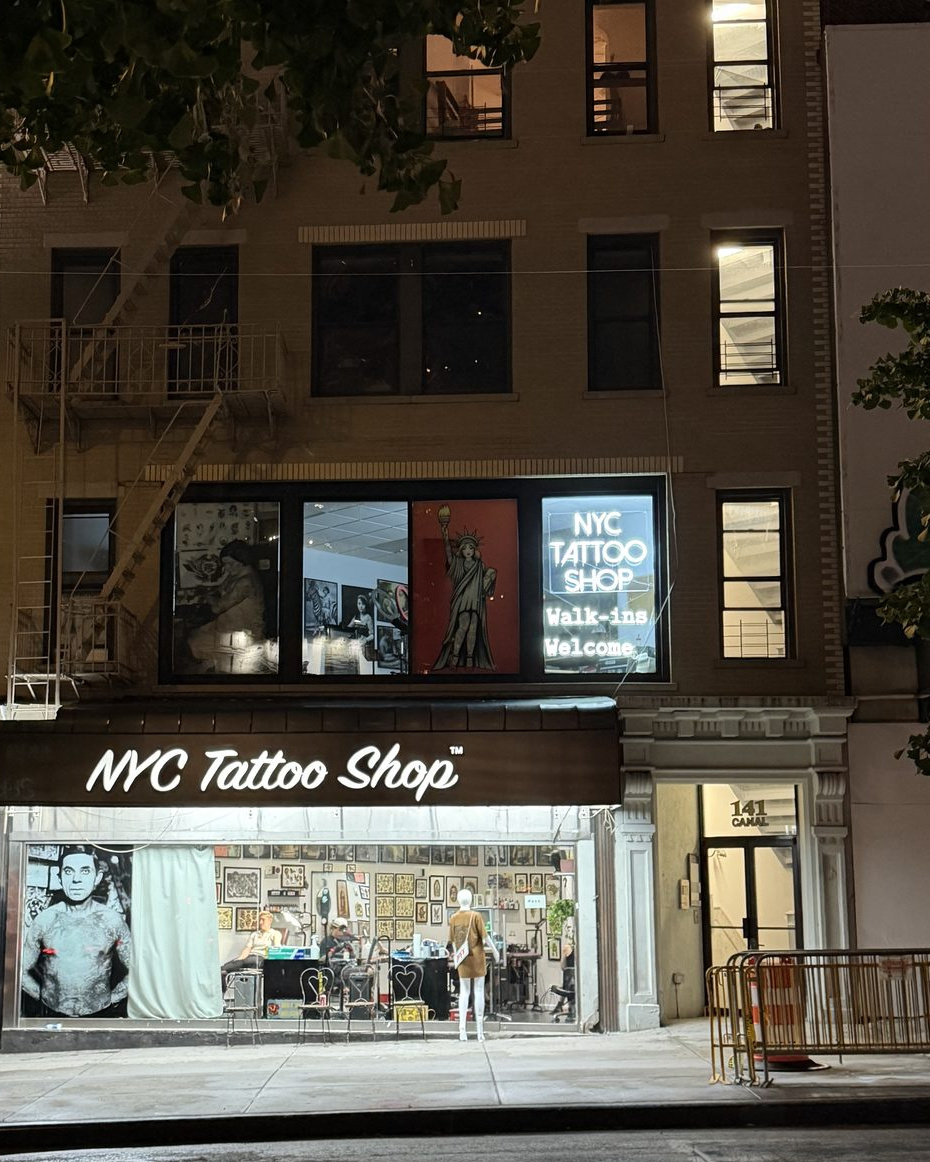
NYC Tattoo Shop is at 141 Canal St, a short walk from Chatham Square. The history here belongs to New York. We’re proud to work nearby.
Photo gallery
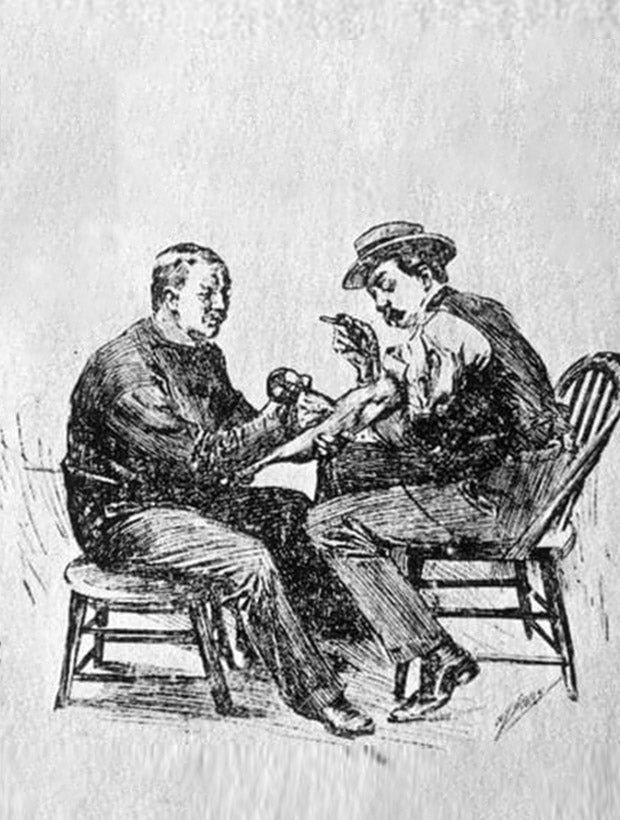
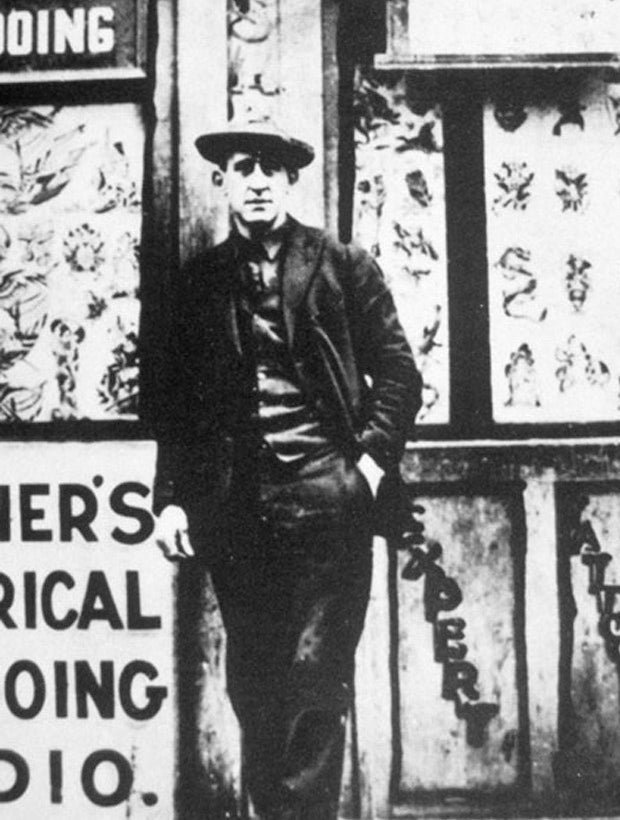
The 1897 Herald illustration is from the NYC Tattoo Shop History Digital Archive (public domain by date). The patent drawing is a U.S. government work. The case-file pages are from the National Archives, via Wikimedia Commons, and are in the public domain. No verified portrait of O’Reilly is used on this page.