
Flash is a set of ready-made tattoo designs, painted on sheets and hung on a shop wall so a customer can point to one. In the early twentieth century, Lew the Jew Alberts — born Albert Morton Kurzman in New York in 1880 — became one of the people most closely tied to that system.[1][5] He learned to draw as a wallpaper designer, learned to tattoo in the Army, and in 1904 signed Charlie Wagner’s patent application as a witness, under his birth name.[1][4] His eagles, flags and cartoon designs were copied in shops far from the Bowery. This page follows the documents, the flash, and the Brooklyn shop on Sands Street, and it flags what is still in dispute.
Quick facts
- Born
- December 13, 1880, New York, as Albert Morton Kurzman
- Died
- October 8, 1954
- Known as
- Lew the Jew Alberts
- Shops
- Chatham Square, with Charlie Wagner, in the early 1900s; 87 Sands Street, Brooklyn, after World War I; later worked from home in Newark, New Jersey
- Known for
- Flash sheets — eagles, flags and cartoon designs — widely copied by other tattooers
- Documented tie
- Signed Wagner’s 1904 patent application as Albert M. Kurzman
Albert Morton Kurzman, New York, 1880
He was born Albert Morton Kurzman on December 13, 1880, in New York, the son of Jewish immigrants.[1] He lived, at different times, in Brooklyn and in Manhattan.[1] We give the city as his birthplace and do not attach a more specific neighborhood than the sources we used will support.
He had technical training in drawing and metalwork, then worked as a wallpaper designer, a background the Tattoo Archive treats as confirmed.[1] The Tattoo History Atlas names the school as the Hebrew Technical Institute; we have not independently confirmed that name and so leave it as a lead.[3]
In 1899 he enlisted in the Army and served in the Philippines, in the era of the Spanish-American and Philippine-American wars. He later said he was tattooed there and learned the craft at the same time.[1]
Chatham Square and the 1904 patent
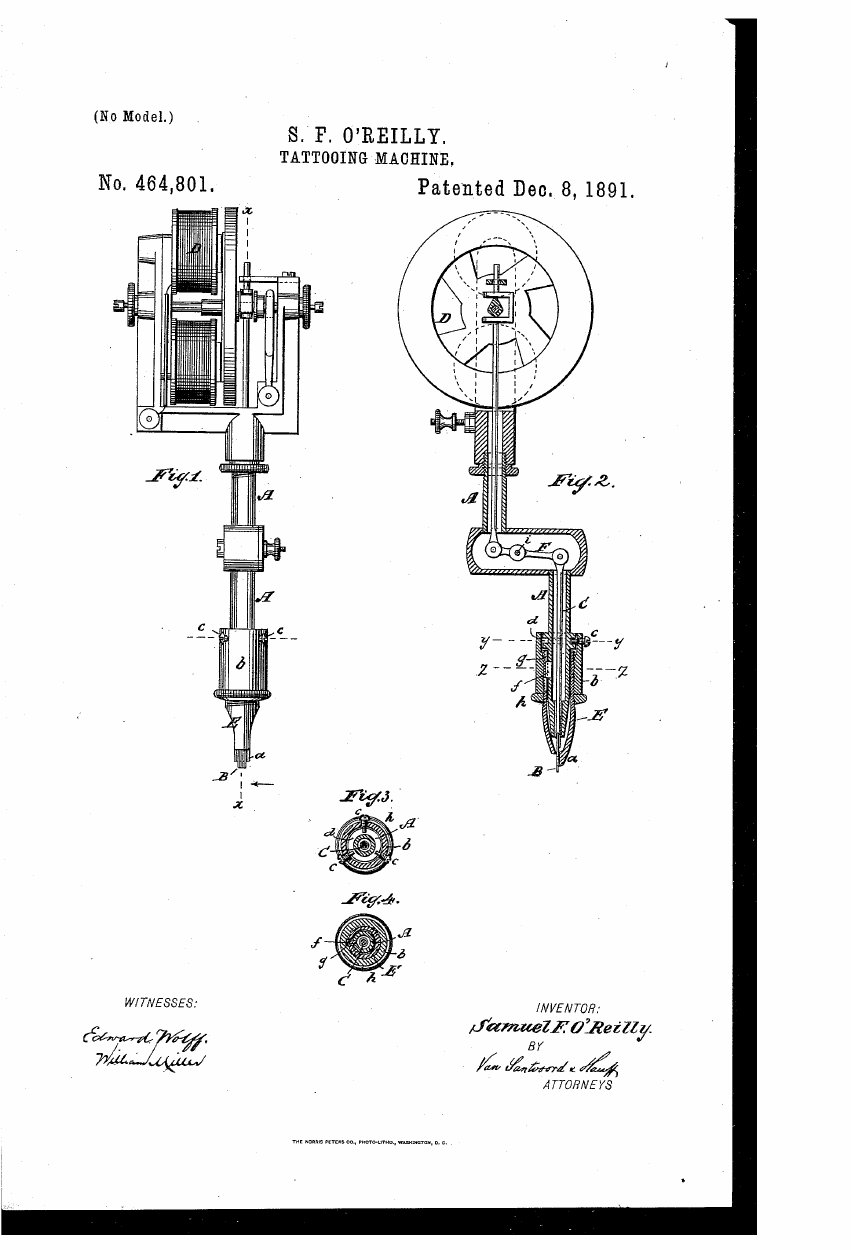
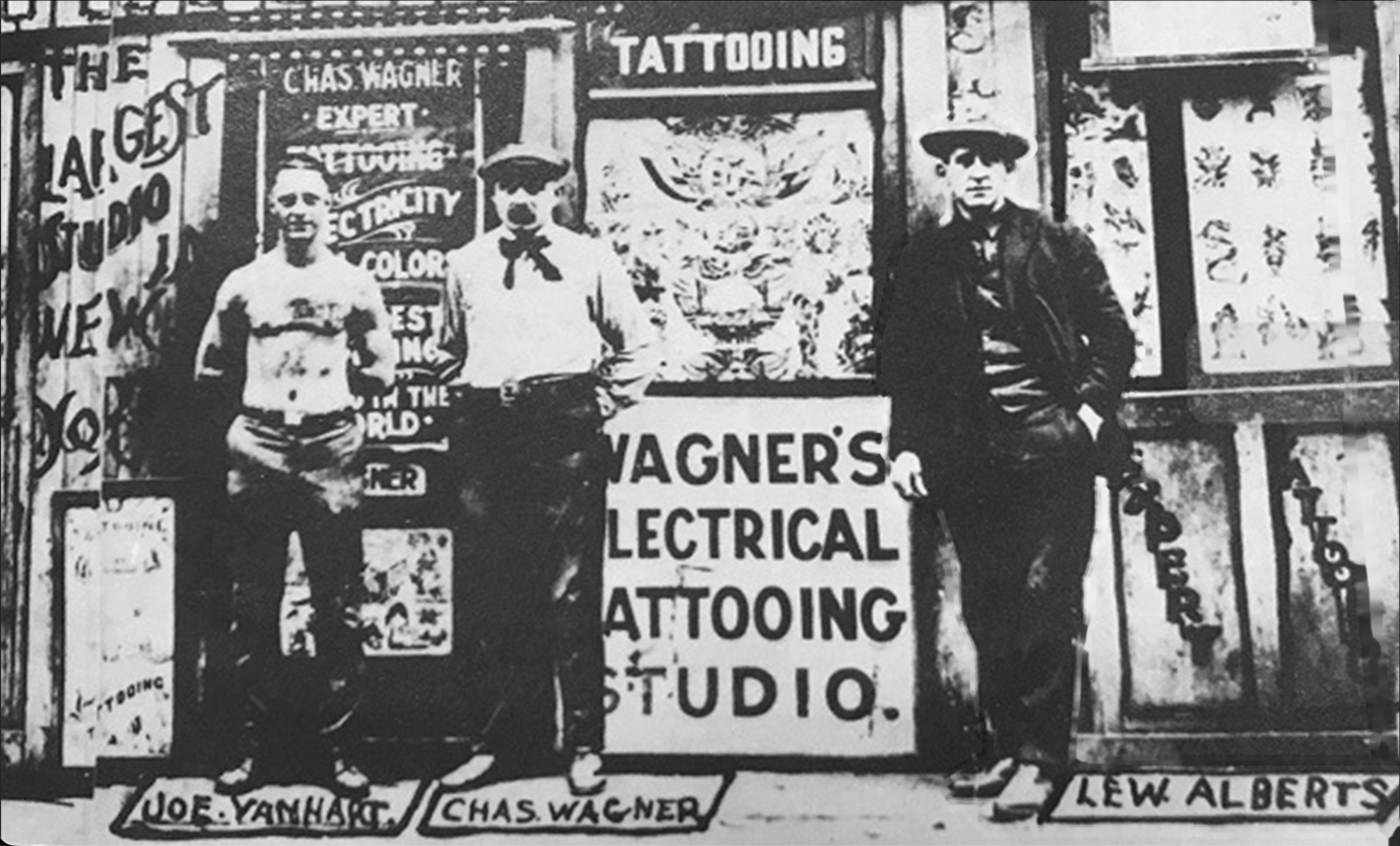
Back in New York he worked with Charlie Wagner at Chatham Square for several years.[1] The earliest firm document tying the two men together is not a photograph but a patent. On Wagner’s application for a “Tattooing Device,” issued August 23, 1904, as U.S. Patent 768,413, one of the witnesses is Albert M. Kurzman.[4] That signature is the birth name of Lew the Jew Alberts.[1][4]
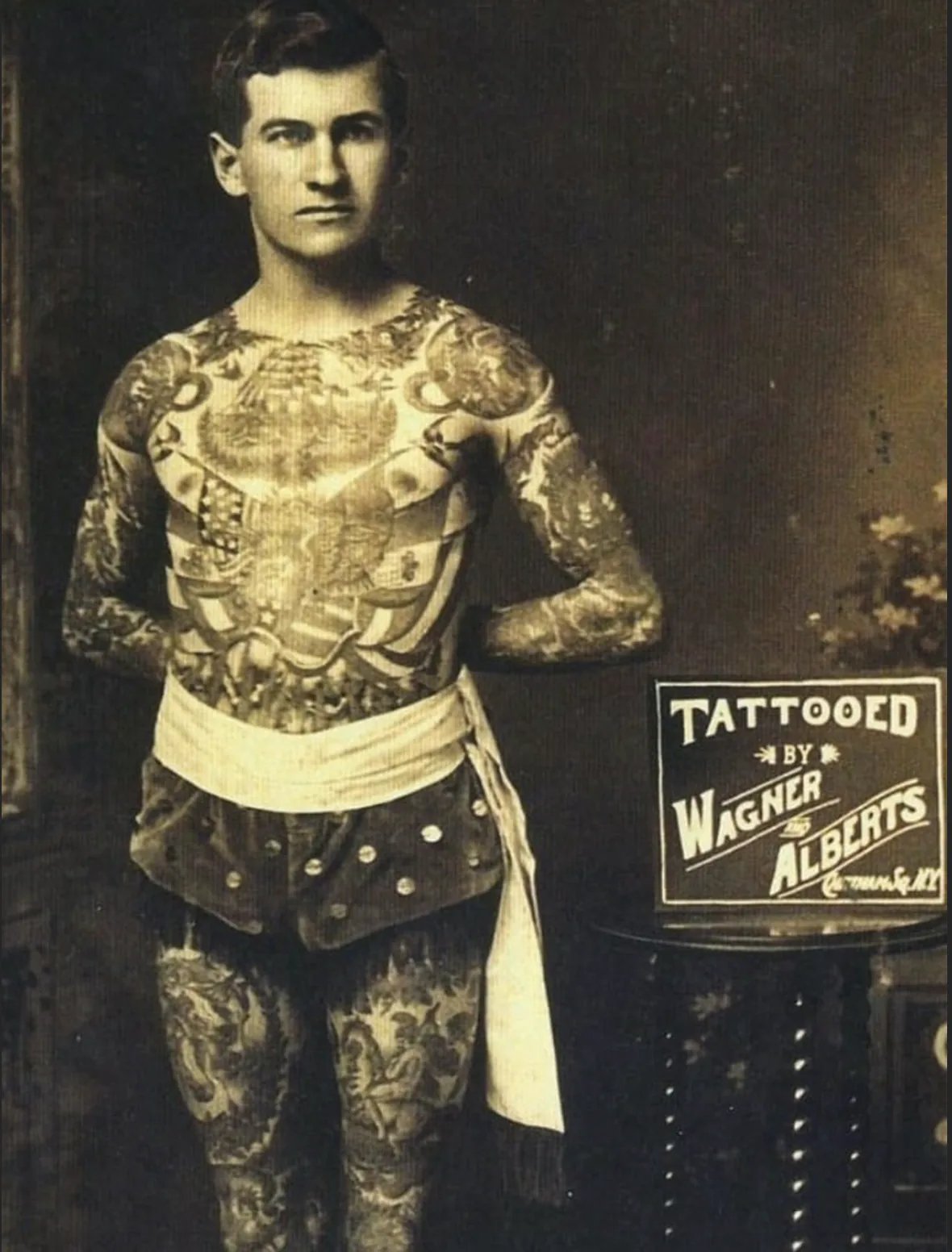
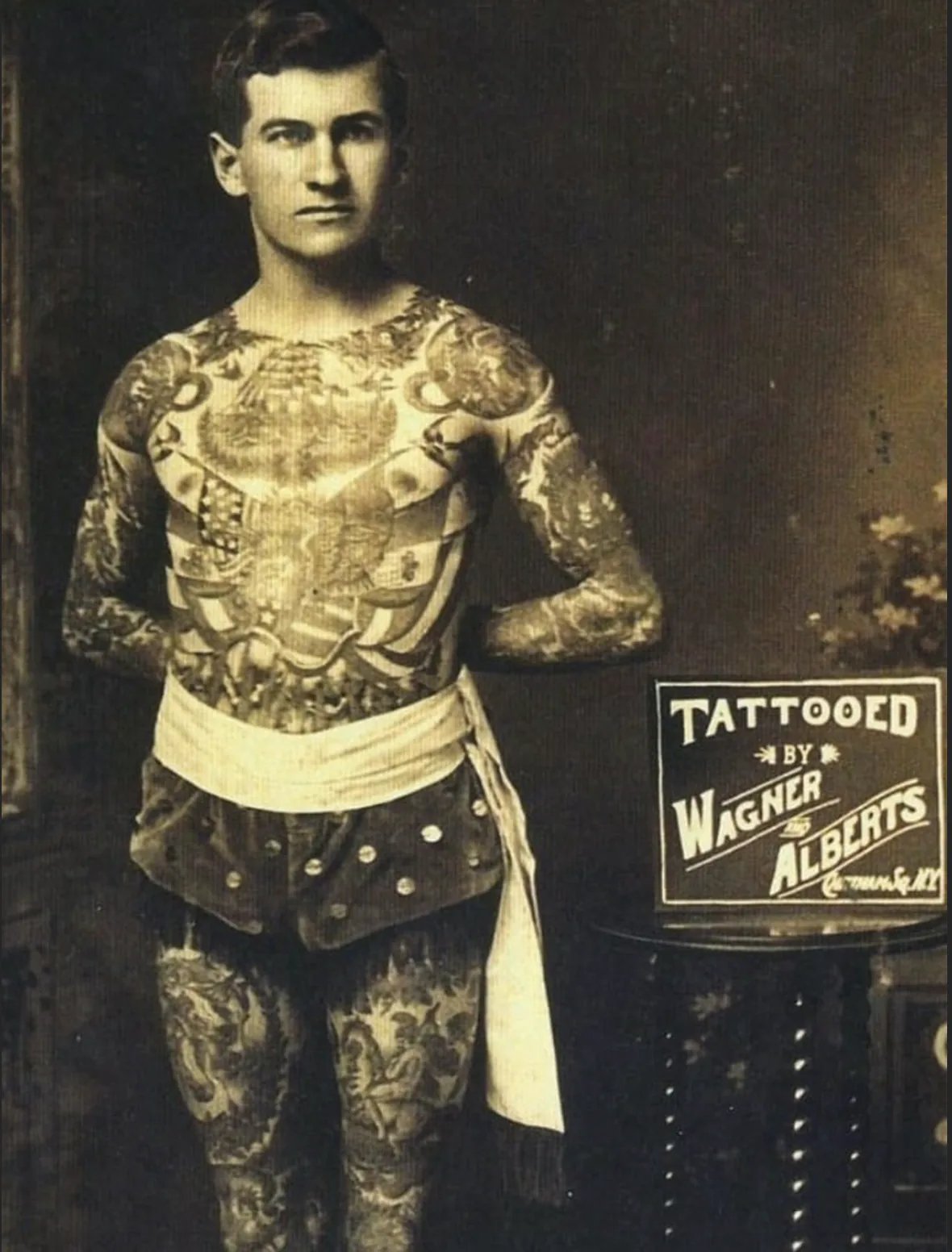
A cabinet card of about 1905 makes the working relationship visible. “Painless” Jack Tryon, covered from neck to ankle, stands beside a hand-lettered card: “Tattooed by Wagner and Alberts, Chatham Sq. N.Y.”[8][9]
The Tattoo Archive suggests he may have used Wagner’s supply business to circulate his flash, and that he advertised in the Police Gazette.[1]
Flash as an art and a business
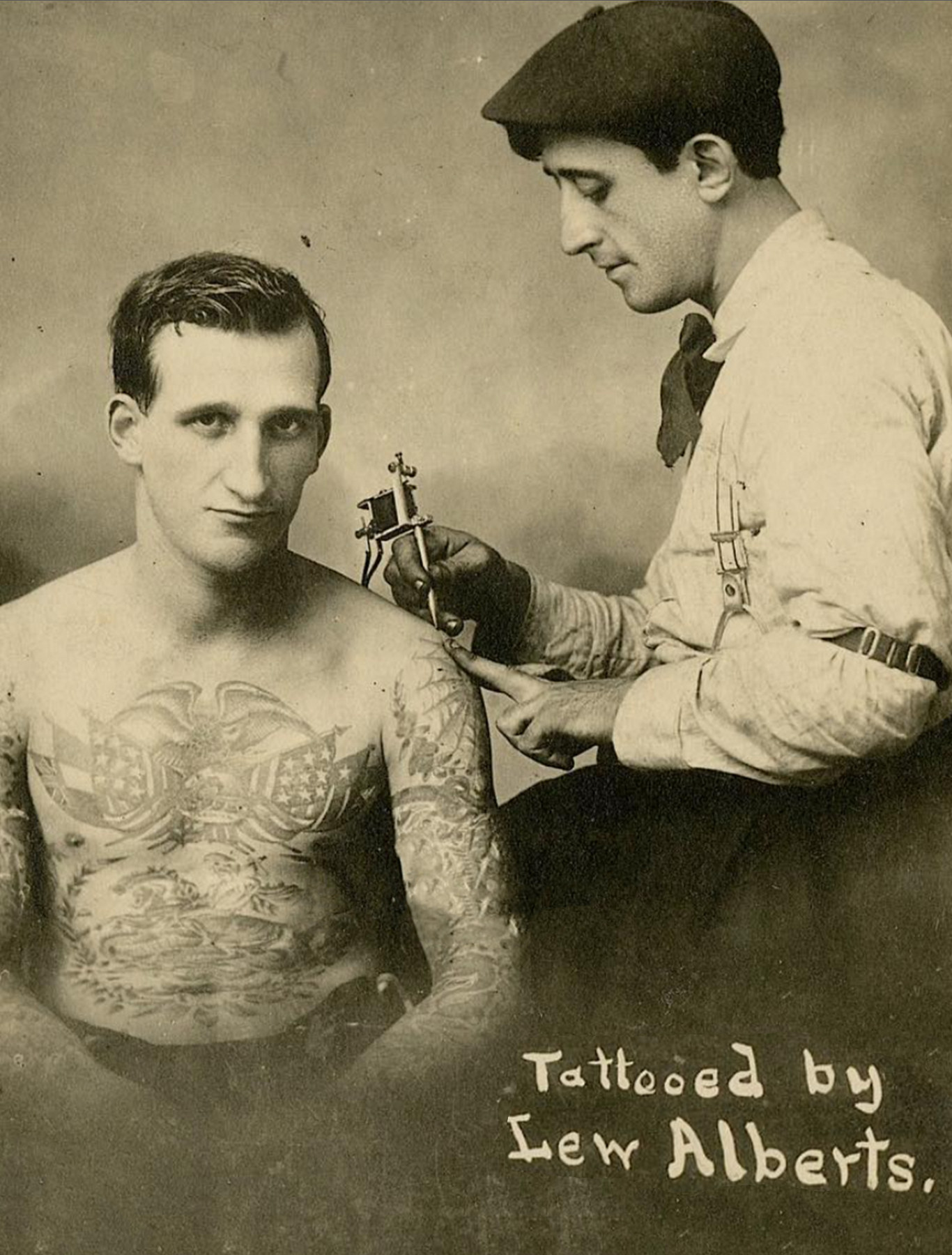
What Alberts is most remembered for is not a single shop address but a way of selling designs. He redrew and issued sheets of eagles, flags and cartoon figures that other tattooers could hang, copy and tattoo from.[1][5] The New-York Historical Society, in presenting its 2017 exhibition Tattooed New York, credited him with developing and popularizing flash in the early twentieth century.[5] The Contemporary Jewish Museum in San Francisco later devoted a show, Lew the Jew and His Circle (2018–19), to his drawings and to the letters and exchanges that show how artists traded work and influenced one another.[6][7] Don Ed Hardy published a book of the early drawings with Hardy Marks.
Not everyone has accepted the origin story in a straight line. The veteran tattooer Bert Grimm later said Alberts had bought Charlie Western’s flash in Portland and sold it as his own.[1] The Tattoo Archive records the counter-story and leaves it unresolved. We do the same. What is not in dispute is that sheets associated with Alberts were widely copied, and that flash — as a commercial system, not only as a style — became central to American shop tattooing.
87 Sands Street, Brooklyn, and later years
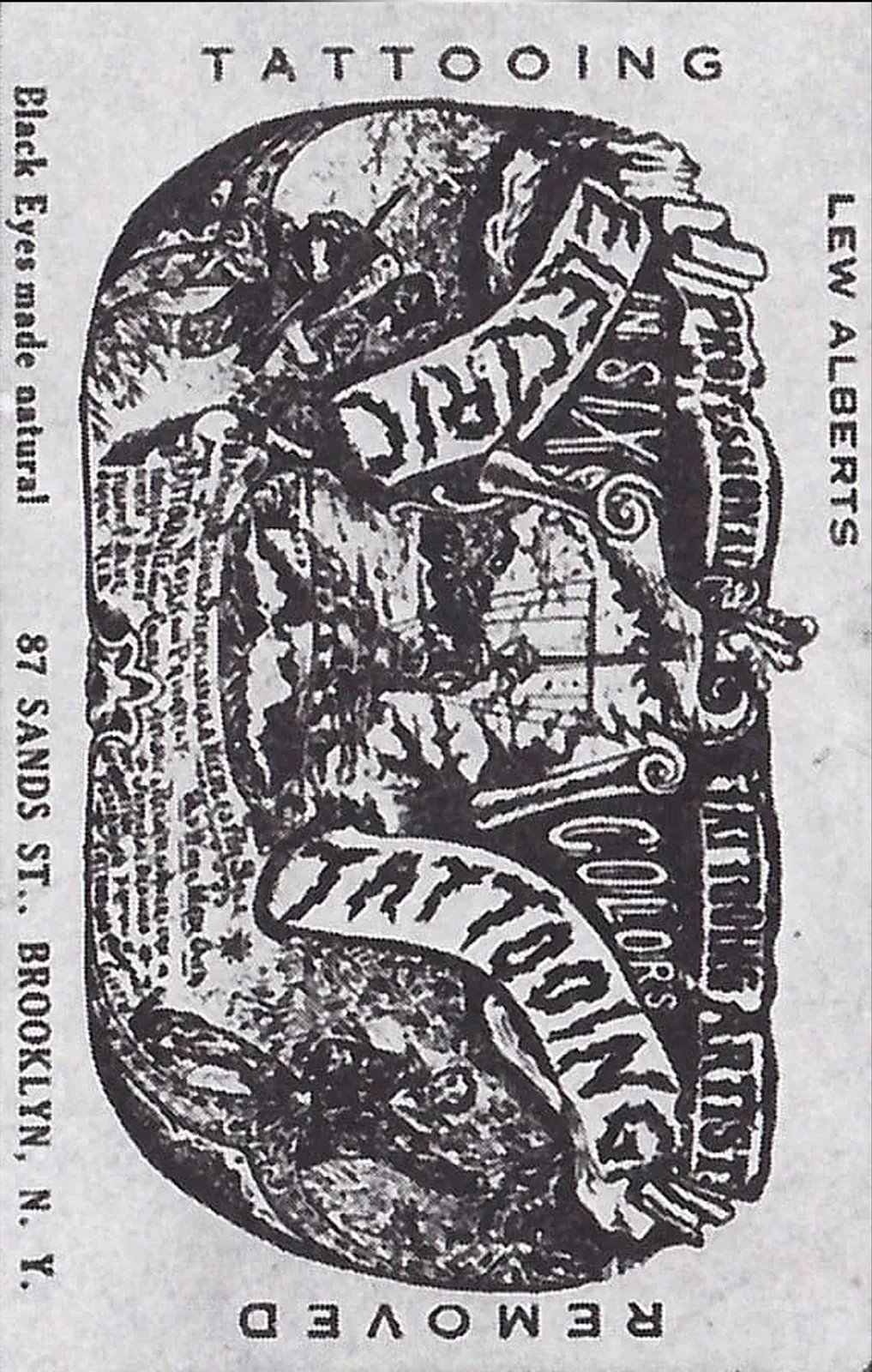
After the First World War he tattooed at 87 Sands Street in Brooklyn, on the strip that served sailors from the Navy Yard.[1] His business card in our archive gives that address and the services of the port trade: “Electric Tattooing in Six Colors,” “Black Eyes made natural,” and “Tattooing Removed.” The card uses the street’s usual spelling, Sands; the Tattoo Archive writes “Sand Street.” Both refer to the same Navy Yard block.
The Tattoo Archive lists competition on that street from Jack Red Cloud, Bill Donnelly and Jim Wilson.[1] In the late 1920s Alberts moved to a home in Newark, New Jersey, and went into semi-retirement.[1] The Tattoo History Atlas notes later correspondence with the tattooers “Brooklyn Joe” Lieber and C.J. “Pop” Eddy.[3]
He died on October 8, 1954.[1] His later career belongs as much to Brooklyn, and then to New Jersey, as to the Bowery. The work that made his name — the sheets on the wall — had already traveled farther than any one shop.
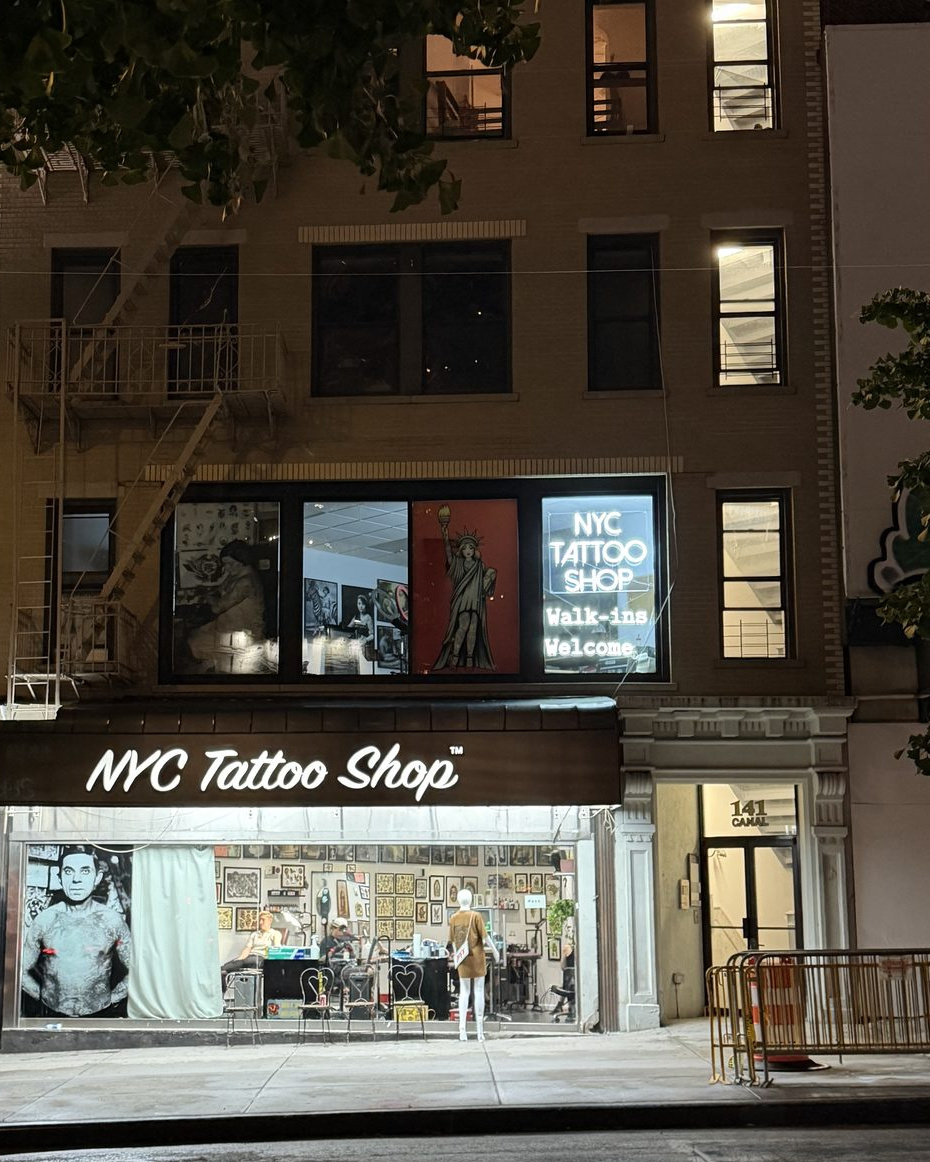
NYC Tattoo Shop is at 141 Canal St, a short walk from Chatham Square, where Alberts and Wagner once worked. The history here belongs to New York. We’re proud to work nearby.
Photo gallery
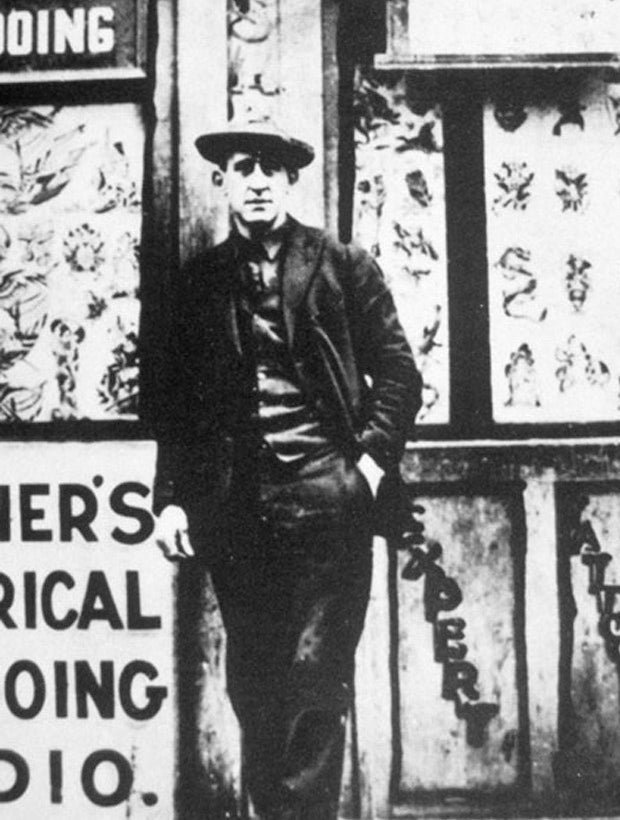
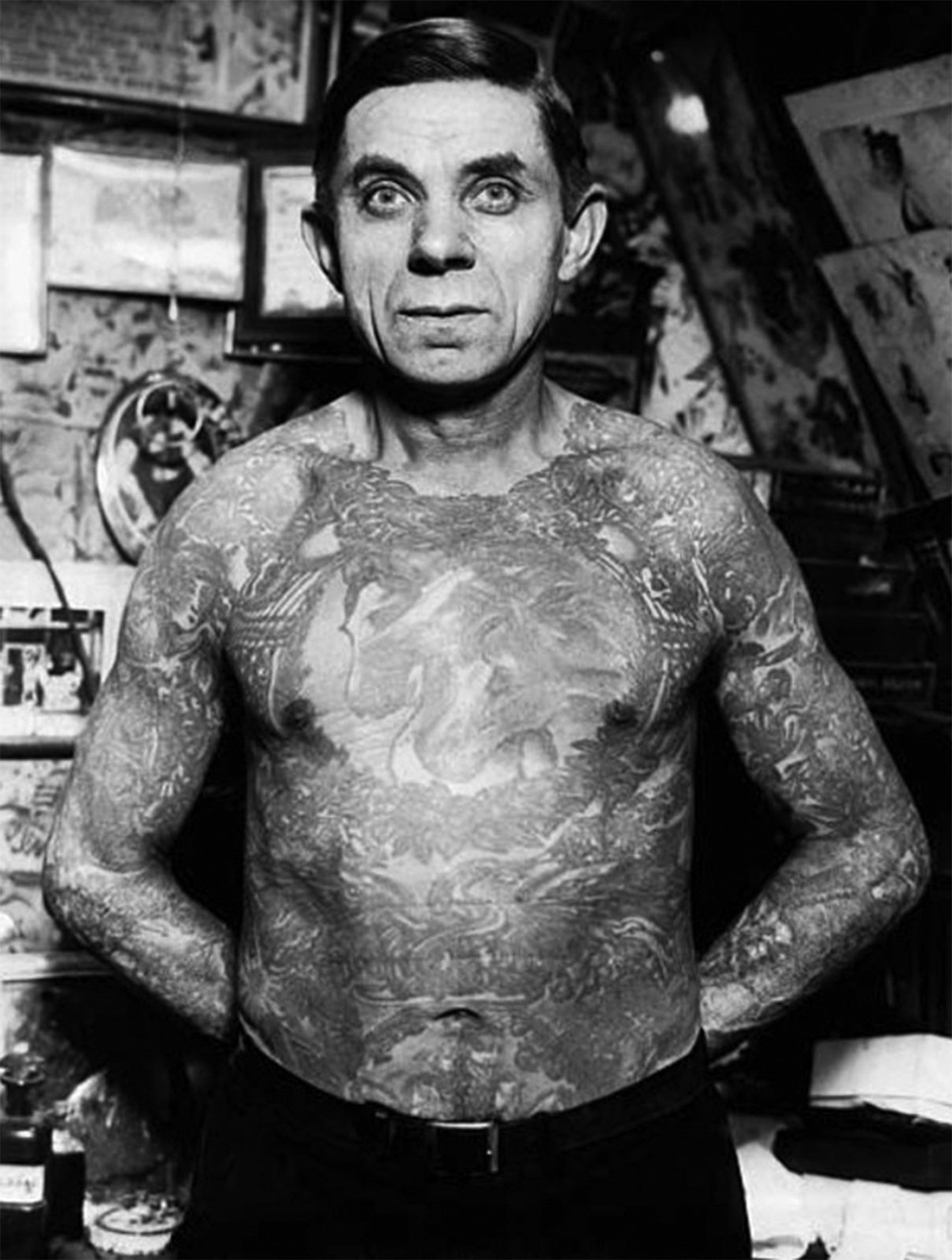
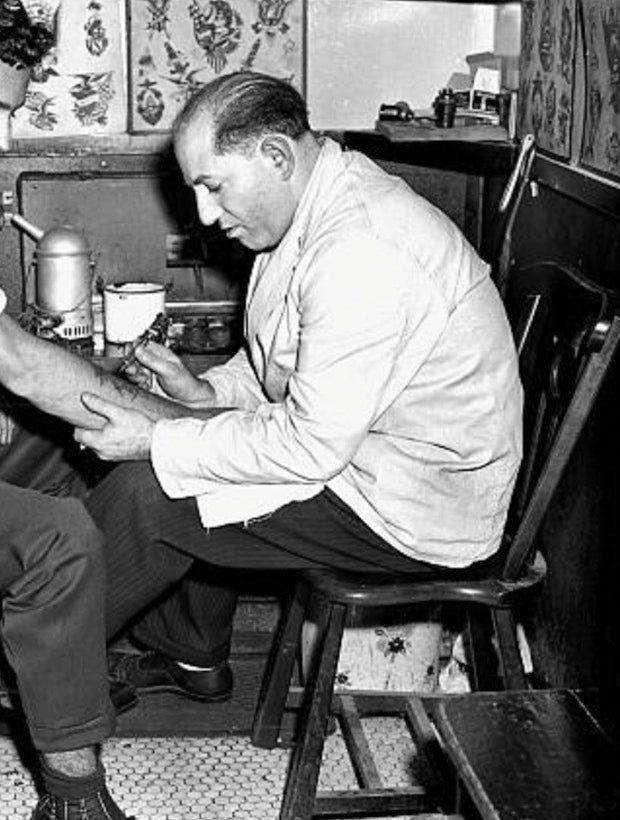
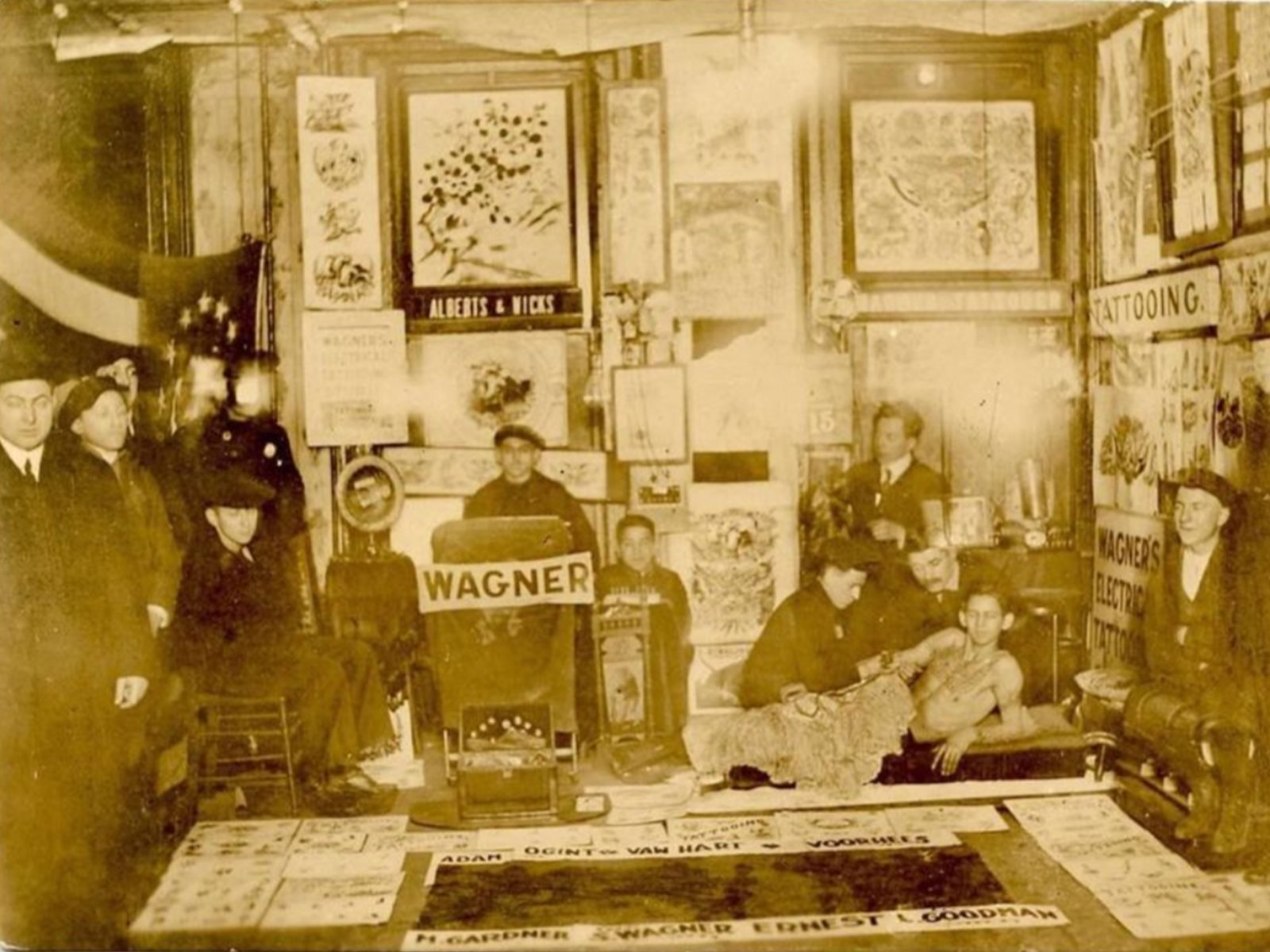
All four images are from the NYC Tattoo Shop History Digital Archive. The Jack Tryon cabinet card is also evidence of the Wagner–Alberts partnership; the parlor interior includes an “Alberts & Hicks” sign. Hicks has not been identified.