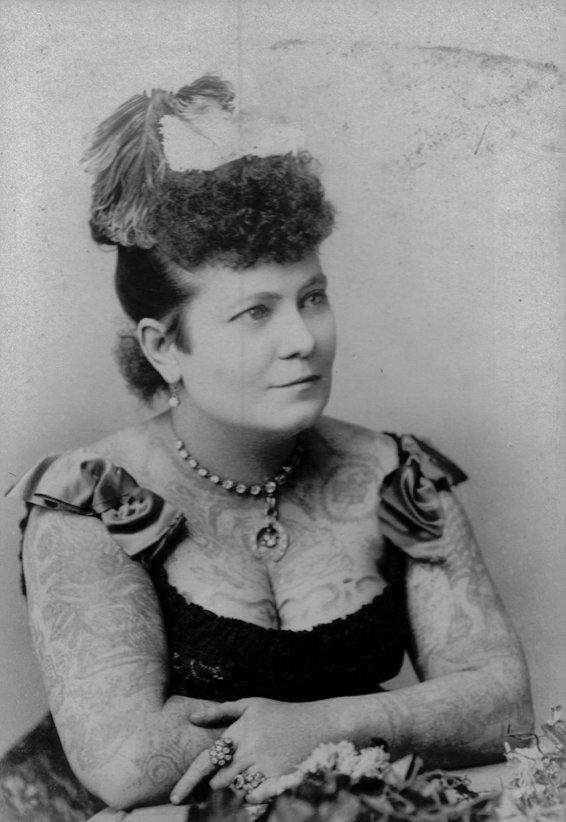

In March 1882 New York suddenly had two professional tattooed ladies. Irene Woodward, billed as “the original tattooed lady,” had a reception at the Sinclair House on March 18 and debuted at Bunnell’s Dime Museum on March 20.[1][3] Nora Hildebrandt was already on that circuit the same month.[1] Irene’s publicity said a sailor father had tattooed her in Texas, or out West, as protection from raiders — a story later writers doubt.[4][2] Who actually tattooed her is not known. This page follows the 1882 notices, the European tour and her death in Philadelphia in 1915, and it leaves the artist’s name blank where the timeline will not support a guess.
Quick facts
- Born
- August 24, 1857, Philadelphia, as Ida Levina Lisk, according to later genealogical work not independently checked here; stage ages sometimes implied a birth around 1862
- Died
- October 9, 1915, Philadelphia, of cancer
- Known as
- Irene Woodward; “La Belle Irene”; “the original tattooed lady”
- Debut
- Bunnell’s Dime Museum, New York, March 20, 1882, after a March 18 reception at the Sinclair House
- Tattooed by
- Unknown. Older accounts name O’Reilly and Wagner; the timeline makes that doubtful
- Married
- Showman George E. Sterling, in 1883 according to Amelia Klem Osterud; they had a son, George
A Philadelphia birth and a stage tale
Later genealogical work, reported by the Tattoo History Atlas and by Vintage News Daily, identifies her as Ida Levina Lisk, born August 24, 1857, in Philadelphia, a shoemaker’s daughter.[1][2] That identification has not been independently checked for this page, and stage ages sometimes implied a birth around 1862.[1] We give the 1857 date as a cited claim, not as a certificate we have seen.
Her publicity booklet, The Facts Relating to Miss Irene Woodward, the Only Tattooed Lady, told a western story: tattooed by her sailor father as a child, as protection, after she had seen a tattooed Greek — Constantine — in Denver.[4][2][3] It is the same family of invented origin stories that Nora Hildebrandt’s pamphlet used, and later writers treat it as publicity, not as fact.[4]
March 1882 and the fight over “first”
On March 18, 1882, she was received at the Sinclair House. The New York Times of March 19 ran a notice under the headline “The Tattooed Woman.”[1] On March 20 she debuted at Bunnell’s Dime Museum. The New York Clipper mentioned her that year with G.B. Bunnell.[1][3]
Nora Hildebrandt’s pamphlet, as cited by the Tattoo Archive, dates Nora’s own Bunnell’s engagement from March 1.[1] The two women were therefore in the same business, in the same city, in the same month, each billed as a first. “The original tattooed lady” is a line from Irene’s advertising, not a title a historian can award from this distance.
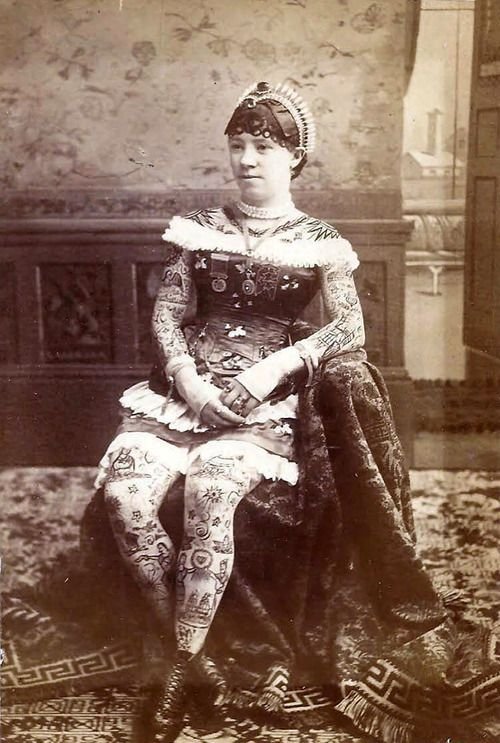
Who tattooed her is a separate problem. The Tattoo Archive and some later summaries have named Samuel O’Reilly and Charlie Wagner.[3][4] The Tattoo History Atlas notes the chronological trouble: she debuted in 1882, when Wagner was still a child, and years before O’Reilly’s 1891 patent.[1] This page treats the tattooer as unknown.
Marriage, Europe and Philadelphia
In 1883, according to Amelia Klem Osterud as cited in later accounts, she married the showman George E. Sterling. They had a son, George.[1] She toured Europe. A poster for the Jardin de Paris, printed after 1888, bills her as “La belle Irène.”[1][6]
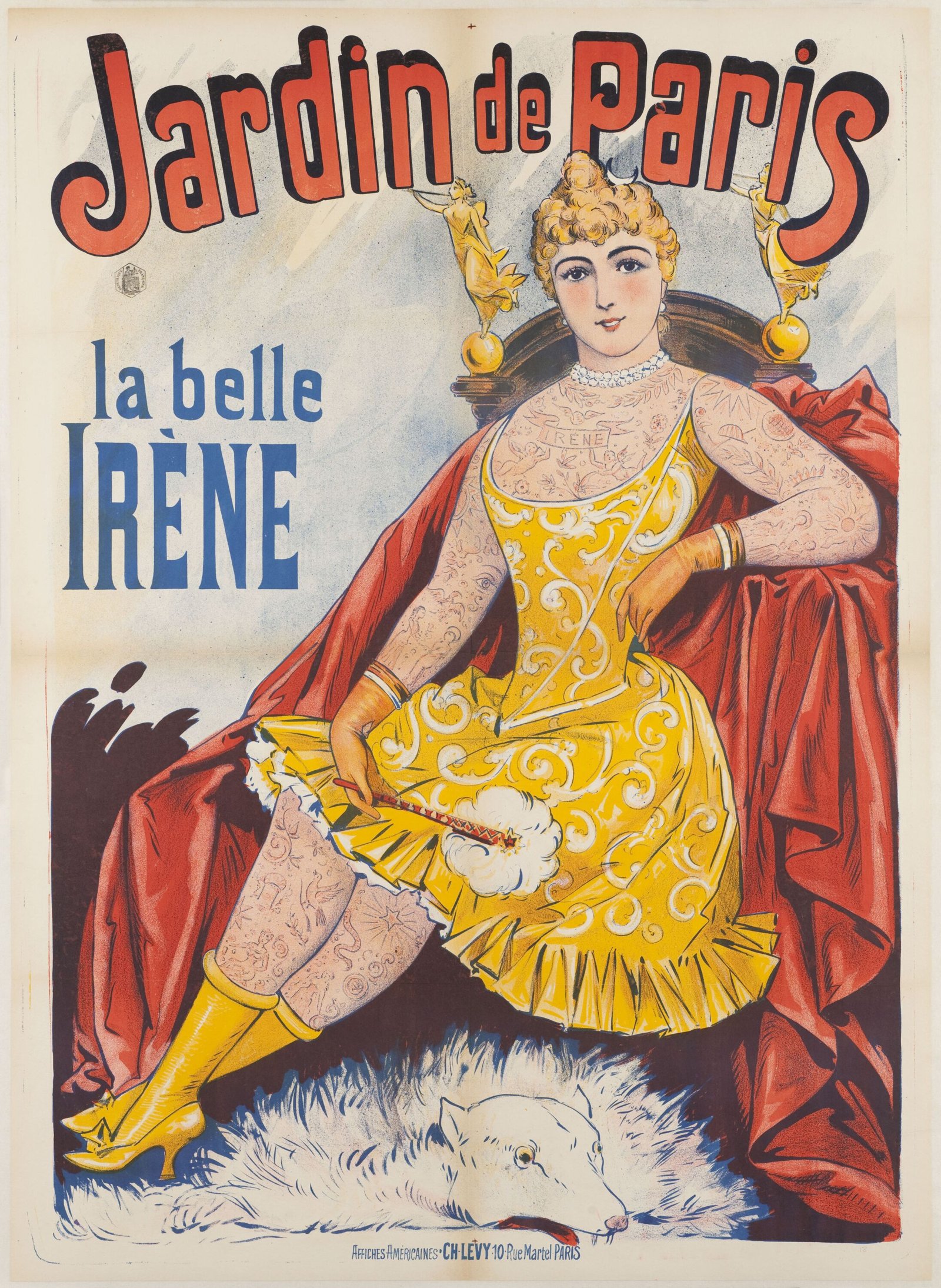
She died of cancer on October 9, 1915, in Philadelphia, and was buried at Monument Cemetery. When that cemetery closed in 1956, the remains were later moved to Lawnview Memorial Park.[1][2]
The 1882 season invented a profession in a matter of weeks. Irene’s surviving portraits, and the Paris poster, are how that profession looked when it was still new enough to need an “original.”
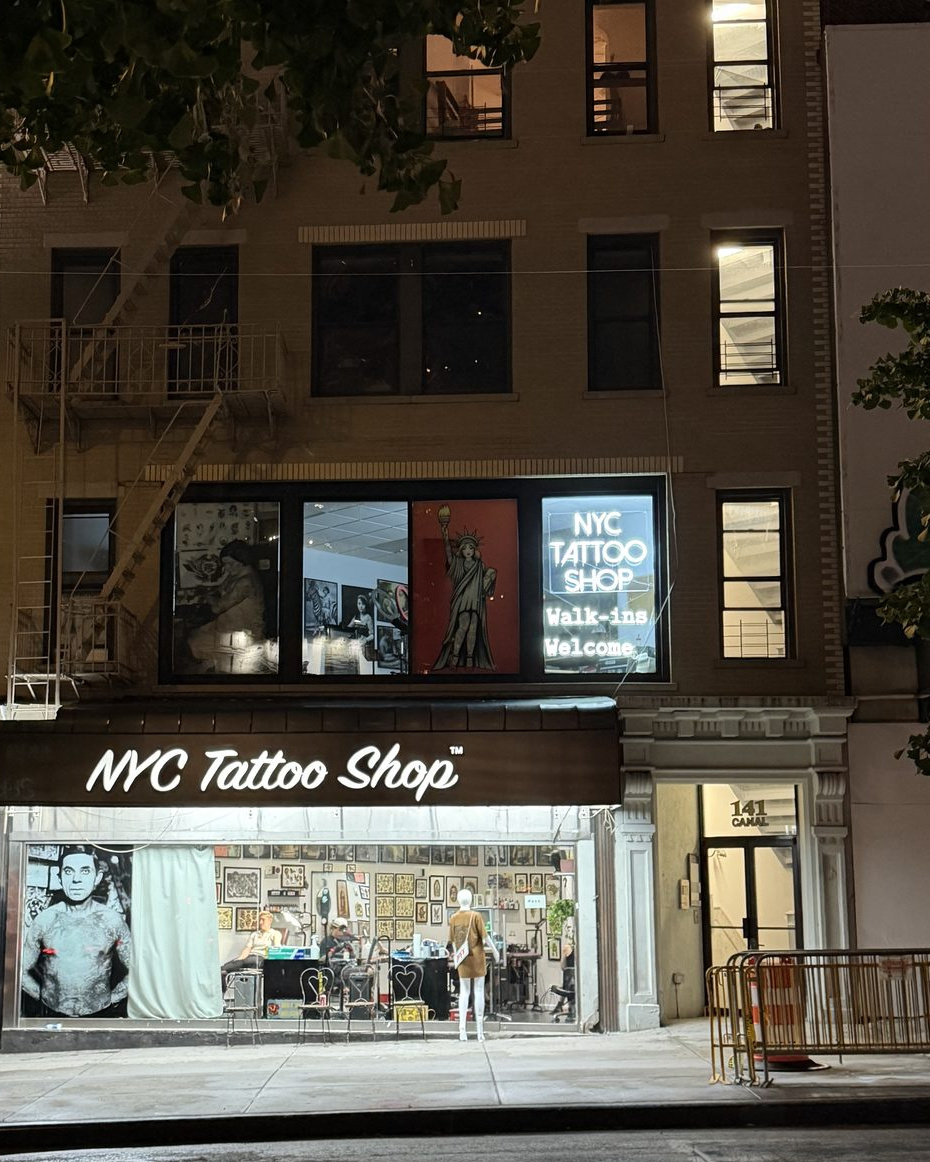
NYC Tattoo Shop is at 141 Canal St, a short walk from the old dime-museum district. The history here belongs to New York. We’re proud to work nearby.
Photo gallery
The Morris cabinet card is in the public domain, via Wikimedia Commons. The Jardin de Paris poster (after 1888) is CC0, via Wikimedia Commons.