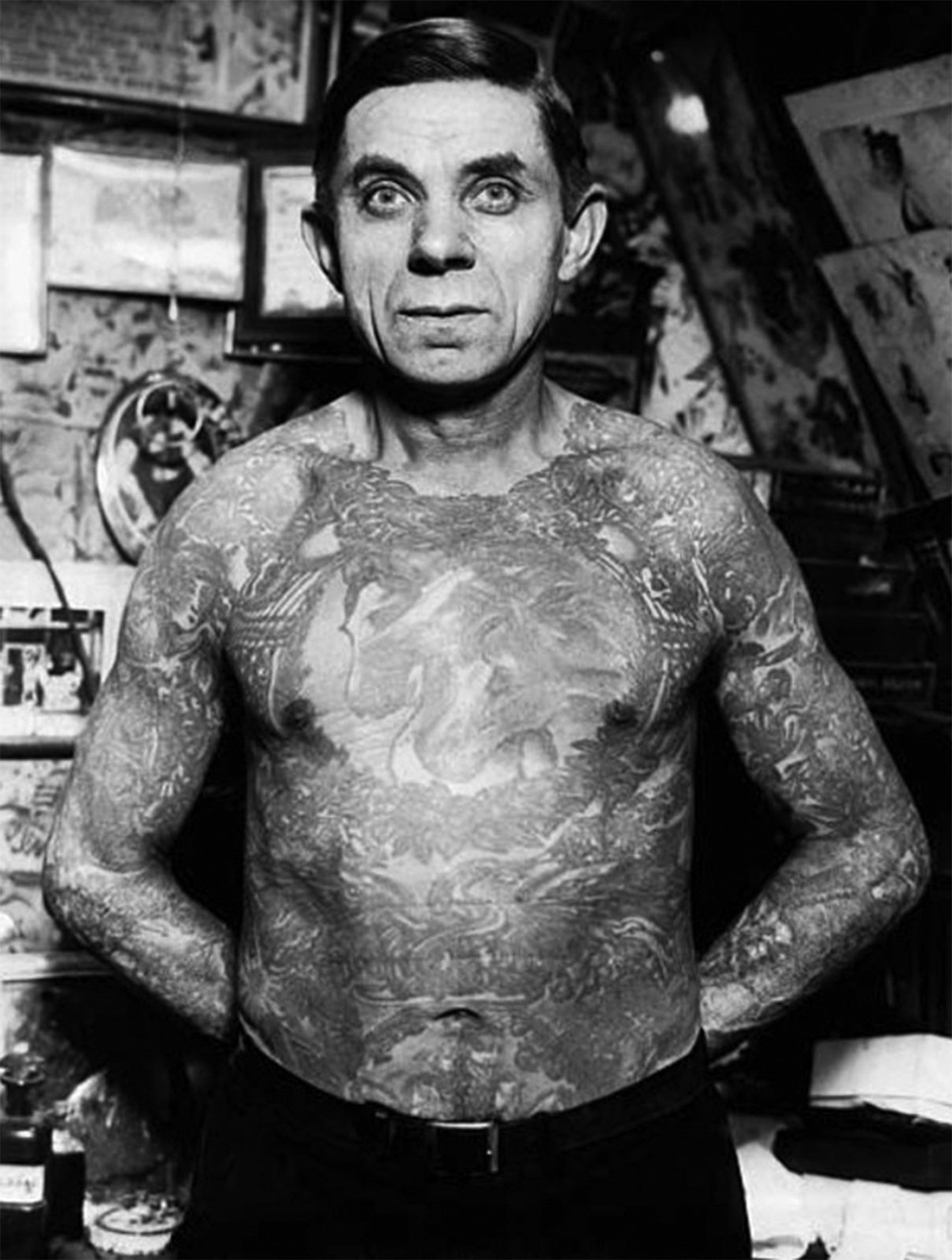

People have tattooed for thousands of years, and New York did not invent the practice. What the city can document, earlier than almost anywhere in the modern West, is a man who made tattooing his listed trade. In the directory for the year ending May 1859, “Hildebrandt, Martin. Tattooing” appears at 361 Water Street, on the old slaughterhouse point along the East River.[2] Matt Lodder has called that entry possibly the first public listing of tattooing as a trade in the West.[2] This page follows Hildebrandt from the Navy to the Civil War and to the Oak Street rooms where the New York Times found him in 1876, and it separates the record from later stories about Nora Hildebrandt and about the war.
Quick facts
- Born
- c. 1825, Germany
- Died
- January 16, 1890, New York City Asylum for the Insane, Wards Island
- Known for
- Earliest documented professional tattooer in New York
- Shops
- 361 Water St (1859); 43 Oak St (listed 1870 as “painter”); 77 James St at Oak (1875); 36½ Oak St (from 1880)
- Tools
- Bundles of No. 12 needles; India ink and vermilion, as described in 1876
- Family
- Wife Mary; son Frank. Nora Hildebrandt took his surname but was neither his wife nor his relative.
From Germany to the Navy
Martin Hildebrandt was born in Germany around 1825.[1][5] As a young man he served on the frigate USS United States from 1846 to 1849 and, by his later account, learned to tattoo from a shipmate.[1][5] The dates put him at sea during the Mexican-American War era, in a navy that already carried tattooing as a forecastle craft.
He later claimed to have sailed with Commodore Matthew Perry’s expedition to Japan. Matt Lodder has described that claim as “perhaps mendaciously” made.[2][5] We record it as something Hildebrandt said, not as a documented voyage.
The 1859 directory and a trade with a name
The 1859 New York directory is the document that gives this story its starting date. It lists him, under the heading “Tattooing,” at 361 Water Street.[2] Water Street at that time ran through Slaughterhouse Point, a waterfront district of markets, boarding houses and sailors’ traffic, not far from the later tattoo block at Chatham Square.
Lodder’s point is not that no one tattooed in Western cities before 1859. It is that a man had begun to advertise the work as his business, in the same kind of directory that listed painters and barbers.[2] That is the sense in which Hildebrandt is called New York’s first professional tattooer, and why the date matters to a history of commercial tattooing.
The Civil War years
Hildebrandt served with the Army of the Potomac.[1][4] After the war he told a reporter what the work had been like. In the New York Times of January 16, 1876, he said, “During war times I never had a moment’s idle time. I must have marked thousands of sailors and soldiers.”[7][1] He also described putting soldiers’ names on them so they could be identified.[1][4]
A later story says he tattooed men in both the Union and Confederate armies. Michelle Myles, who has worked through the primary record, found no evidence for that version, and we treat it as legend.[5][4]
By his own account he took up tattooing as an “exclusive profession” around 1866.[2] The 1870 directory still listed him at 43 Oak Street as a “painter,” a reminder that occupational labels in city books can lag behind the work itself.[2]
Oak Street, James Street and a visit from the Times
Hildebrandt did not keep a single permanent address. After Water Street, the record puts him at 43 Oak Street (1870), at 77 James Street at Oak in 1875, and at 36½ Oak Street from 1880.[1][5] Wikipedia also mentions a tavern shop on Oak Street in 1870 or 1872.[5] Oak and James Streets, in the old Fourth Ward, were later razed, in 1947, for public housing.[1][5]
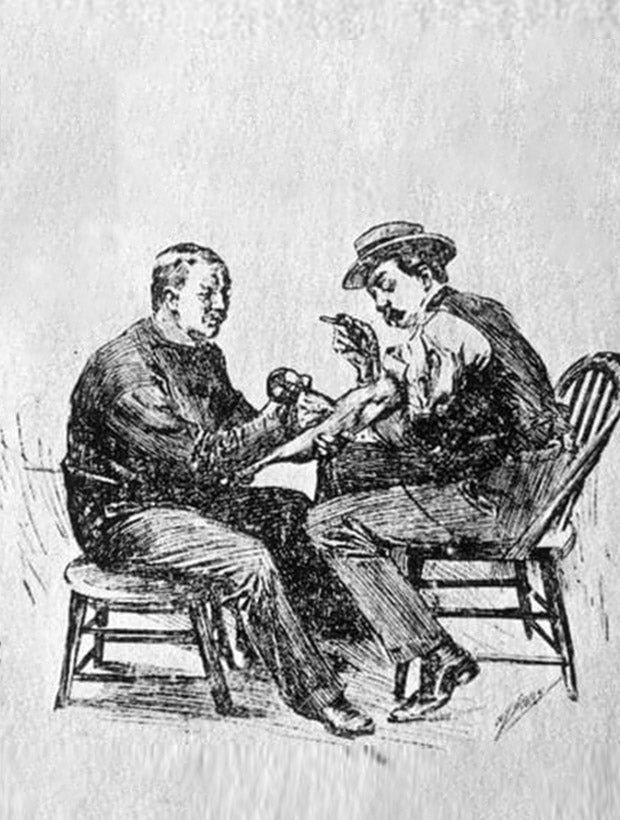
The 1876 Times visit is the fullest contemporary description of the room. The shop, the paper said, was like “a tavern, with a well-sanded floor.”[3][1] His tools were a bundle of No. 12 needles, dipped in India ink or vermilion. The design book included the Crucifixion, Odd Fellows emblems, anchors, and faith, hope and charity.[3][1] At 36½ Oak Street a painted Goddess of Liberty sign read “Tattooing done here by Martin Hildebrandt.”[1]
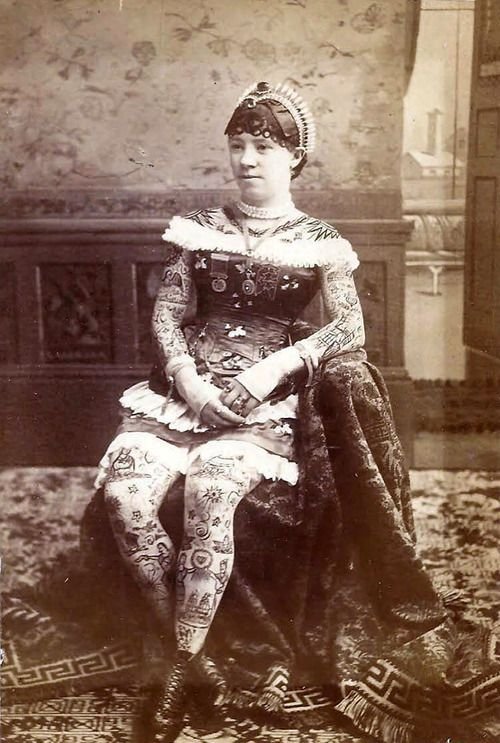
He also tattooed performers. A cabinet card of Capt. Harry DeCoursey, whose birth name was William Denny, is inscribed as the work of Martin Hildebrandt and Stephen Lee.[8] The South Street Seaport Museum notes that he tattooed several women who then worked as “tattooed ladies” in dime museums and traveling shows.[6]
Michelle Myles identified a wife, Mary, and a son, Frank.[1]
Nora Hildebrandt, the asylum and his death
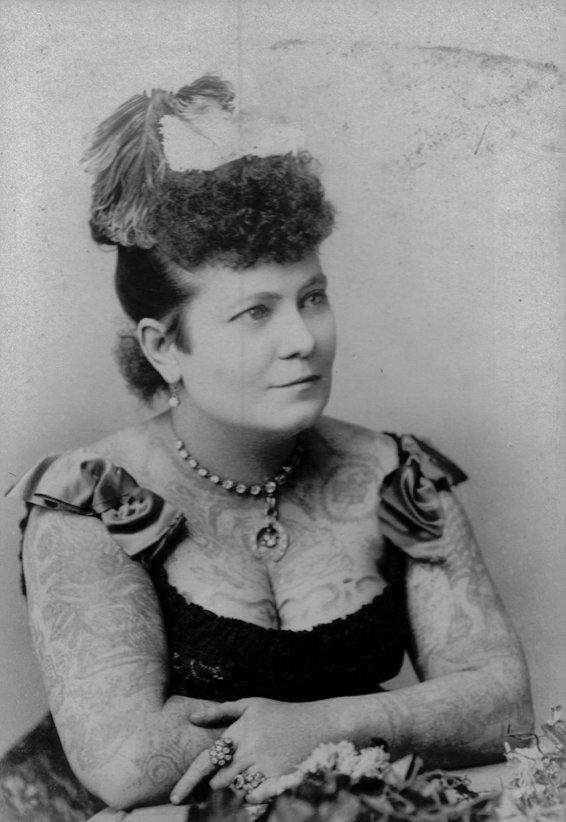
The name most often attached to his is Nora Hildebrandt, who debuted as a tattooed performer at Bunnell’s Dime Museum in 1882.[6] Publicity sometimes called her his daughter, and some later writers have called her his common-law wife. Research published by the South Street Seaport Museum in January 2026, following Michelle Myles, is clear: Nora was born in England, assumed his surname, and was often presented as his daughter or his wife, but she was neither married to him nor related to him.[6][1] He is credited with her tattoos.[6] Her page takes up the 1882 debut and the fabricated captivity story used to promote her.
In June 1885 Hildebrandt was jailed for disorderly conduct. His son said he was insane, and he was transferred to the city’s asylum, a sequence reported in the New York Clipper of June 20, 1885.[1] He died on January 16, 1890, at the New York City Asylum for the Insane on Wards Island, at the age of 65. Michelle Myles located the death certificate.[1][5]
Whether he taught Samuel O’Reilly, who would patent a tattooing machine in 1891, is sometimes suggested and has not been documented in primary records.[9][10] What the directories, the 1876 interview and the death certificate do show is earlier: a German sailor who made tattooing a listed New York trade, a generation before the electric shops at Chatham Square.
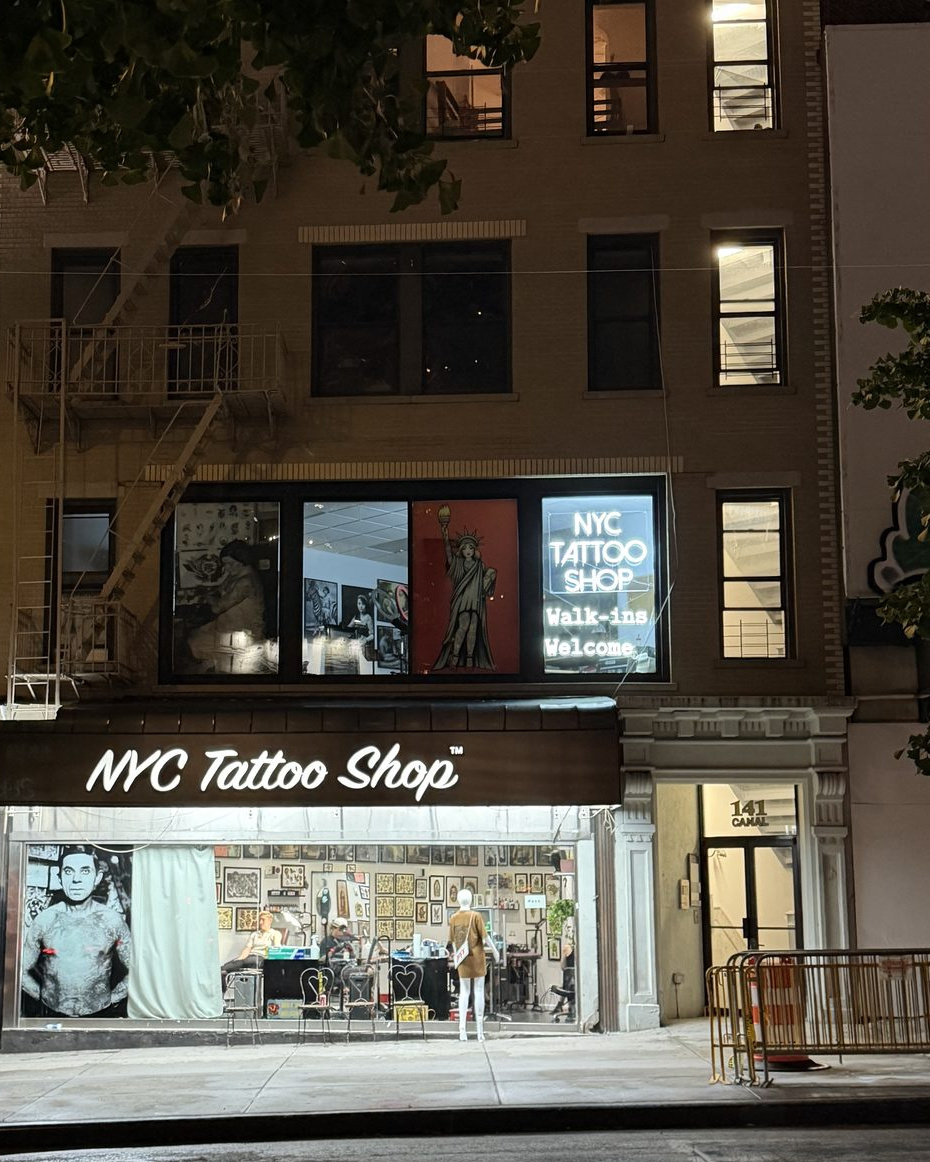
NYC Tattoo Shop is at 141 Canal St, a short walk from the old Oak Street neighborhood. The history here belongs to New York. We’re proud to work nearby.